
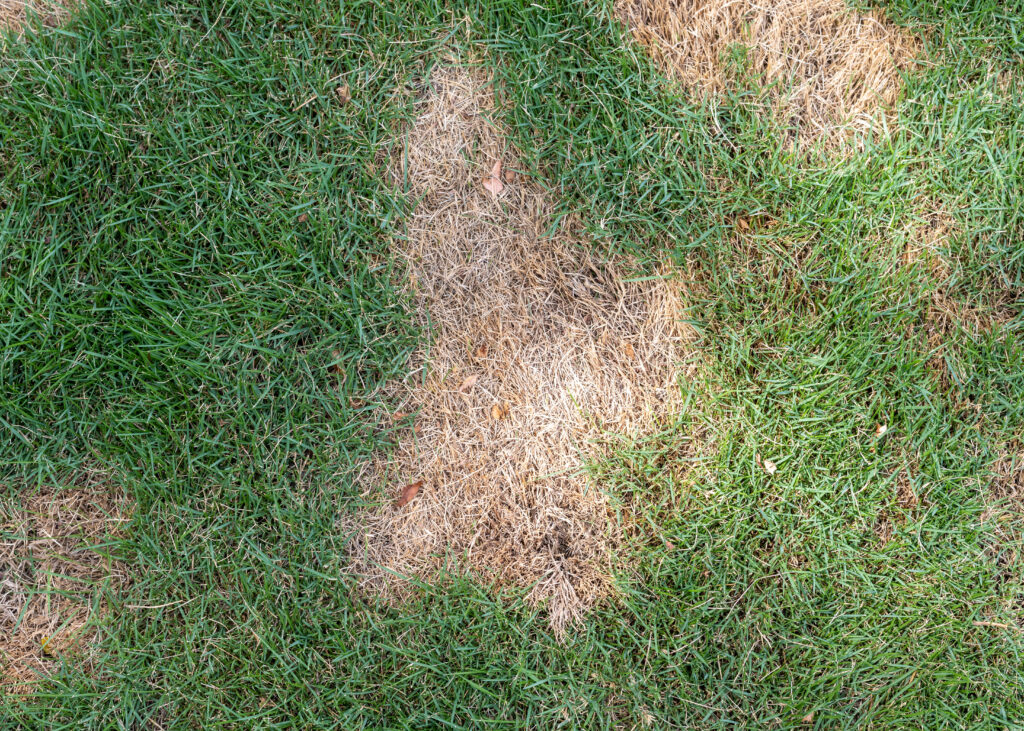
Some landscape problems seem to return on schedule.
The same section of turf thins out every summer. Weeds keep appearing in one area. A planting bed stays too wet after storms. Shrubs struggle in the same location year after year.
When a problem keeps coming back, the issue is often not the symptom itself. It is an underlying condition that has never been fully corrected.
For commercial properties in Central Kentucky, fall is a good time to look beyond what went wrong this season and identify why certain areas continue to struggle.
Thin Turf May Be a Soil or Site Problem
Repeatedly thin turf is easy to blame on heat, drought, or heavy use. Those factors may contribute, but if the same area declines every year, there may be more going on.
Common causes include:
- Compacted soil
- Heavy foot or equipment traffic
- Poor irrigation coverage
- Excess shade
- Drainage problems
- Mowing stress
- Turf that is poorly suited to the location
Overseeding can improve density, but adding seed every fall will not permanently solve a condition that prevents grass from establishing.
For example, turf beside a busy walkway may continue thinning if compaction is not addressed. Grass beneath dense tree cover may struggle because it receives too little sunlight. A dry section may need an irrigation adjustment rather than more fertilizer.
The pattern matters. If turf repeatedly declines in the same location, it is worth asking what makes that area different from the rest of the property.
Recurring Weeds Often Point to Weak Turf
Weeds are another problem that can seem endless.
Treatments may reduce visible weeds for a while, but they often return when the conditions that allowed them to establish remain unchanged.
Thin turf leaves open soil where weeds can germinate. Compacted or poorly drained areas may favor certain weeds over desirable grass. Improper mowing, irrigation, or fertility can also reduce turf density and make weed competition easier.
Effective weed management therefore involves more than controlling the weeds you can see.
Improving turf density, correcting soil problems, and maintaining appropriate growing conditions can make the landscape less favorable for future weed pressure.
Irrigation Problems Can Create the Same Dry Spots
If one area turns brown every summer, it may look like the lawn simply cannot tolerate the heat.
Sometimes the real problem is irrigation coverage.
Sprinkler heads can shift, become damaged, get blocked by plant material, or distribute water unevenly. Slopes and compacted soil may also cause water to run off before it reaches the root zone.
At the same time, too much irrigation can cause its own recurring issues, including saturated soils and stressed plants.
When the same dry or overly wet areas appear repeatedly, checking the irrigation system and soil conditions can reveal more than simply increasing or decreasing watering across the entire property.
Drainage Problems Rarely Correct Themselves
Areas that remain wet after rain deserve attention, especially if the pattern repeats year after year.
Poor drainage may contribute to:
- Thin turf
- Muddy areas
- Root stress
- Plant decline
- Erosion
- Standing water
Adding new plants or reseeding the area may improve its appearance temporarily, but those improvements may struggle if excess water remains the underlying issue.
The solution depends on the cause. Soil compaction, grading, runoff patterns, irrigation, and site design can all affect how water moves through a landscape.
Understanding the source of the problem should come before deciding how to correct it.
Some Plants Are Simply in the Wrong Place
A shrub that repeatedly struggles does not necessarily need more fertilizer or water.
Sometimes the growing conditions do not match what the plant needs.
Sun exposure can change as trees mature. Drainage may be too poor or too fast. Plants near pavement can experience additional heat. Others may outgrow the space available or receive more shade than when they were originally installed.
If plants consistently require extra attention but continue to decline, replacing them with species better suited to the location may provide a more sustainable solution than repeating the same treatments.
Repeated Problems Can Become Maintenance Problems
Recurring landscape issues do more than affect appearance. They can also lead to repeated repairs, additional treatments, and maintenance time.
A bare area that is reseeded every year, for example, may be more expensive over time than correcting the compaction, traffic pattern, or irrigation problem responsible for the damage.
Looking at long-term patterns can help property managers prioritize improvements that address the cause rather than repeatedly managing the symptom.
Fall Is a Good Time to Look for Patterns
By September, commercial landscapes across Central Kentucky have been through enough of the growing season for many recurring problems to become obvious.
Instead of viewing thin turf, weeds, drainage concerns, or declining plants as isolated issues, look at where they occur and whether the same areas struggled last year.
Questions worth asking include:
- Does this turf thin out in the same location every summer?
- Are weeds concentrated in particular areas?
- Does water consistently collect or run off in the same places?
- Are certain plants repeatedly declining?
- Does one part of the property need significantly more maintenance than the rest?
Those patterns can help guide fall improvements and future maintenance planning.
Fix the Cause, Not Just the Symptom
Healthy landscapes are rarely the result of one treatment. They depend on the relationship between soil, water, sunlight, plant selection, traffic, maintenance practices, and seasonal conditions.
When the same landscape problem keeps returning, repeating last year’s solution may only produce the same result.
A better approach is to determine what is causing the pattern and decide whether the property needs a change in maintenance, irrigation, soil conditions, plant selection, or landscape design.
For commercial properties in Central Kentucky, taking that broader view in fall can help turn recurring trouble spots into more reliable, manageable parts of the landscape.
Contact us today to schedule an evaluation.